BoardPro users were already familiar with standalone eSigning tools. The challenge was not simply adding another signing feature, but designing an experience that supported the specific workflows involved in board governance.
The product needed to handle both internal approvals and external document signing, each with different expectations, responsibilities and levels of formality.
My Contribution
I led research and design activities in close collaboration with the Product Manager to define the MVP scope and prioritise the most important workflows for launch. This included:
User research and workflow discovery
Product requirement definition
Wireframing and solution design
Prototype validation
Usability testing
A key part of the work was identifying which signing behaviours were essential within governance contexts, rather than replicating the complexity of dedicated eSigning platforms.
Research & Product Direction
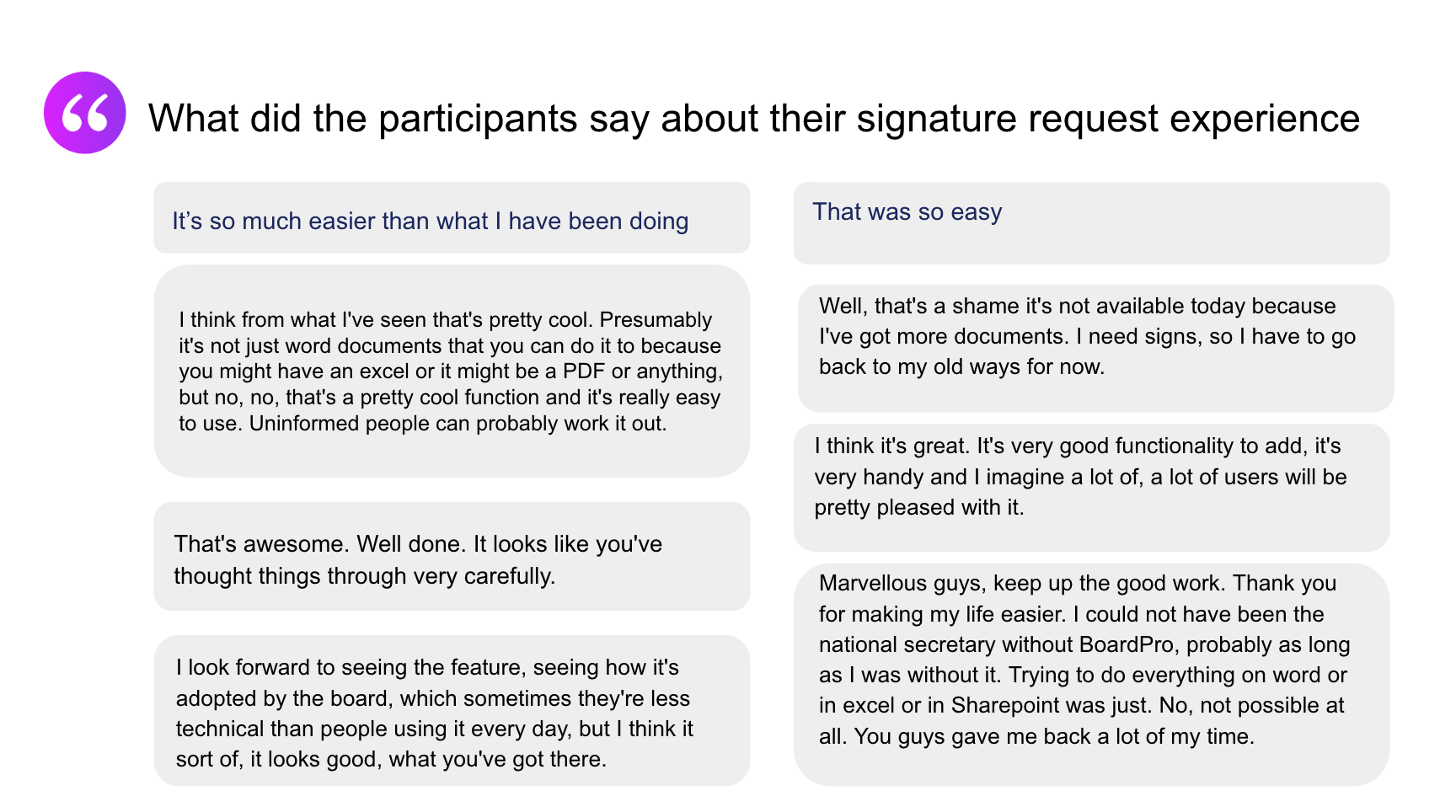
Through interviews and iterative usability testing with board secretaries and board chairs, we explored how signing processes fit into existing governance practices.
The research helped clarify:
the difference between internal confirmations and external signing flows
where users expected simplicity versus formality
which features were genuinely necessary for v1
This allowed the team to reduce initial scope by around 20% while preserving the workflows users relied on most.
Outcome
The feature was successfully adopted as part of board meeting workflows.
Between November 2023 and March 2024, 16.1% of all meeting minute confirmations included signature requests.
The inclusion of minutes signing also contributed to a 3% increase in product conversion, helping strengthen the platform’s value proposition for governance focused organisations.
Shaping the MVP
I used research and iterative testing to help define what genuinely needed to be included in the first release.
Working with board secretaries and board chairs, we tested early concepts to understand which signing behaviours were essential within governance workflows and which could wait for later iterations.
This helped the team reduce the initial scope by around 20% while still supporting the workflows users relied on most.

Work examples
Define Stage/User Research
-
![Participants]()
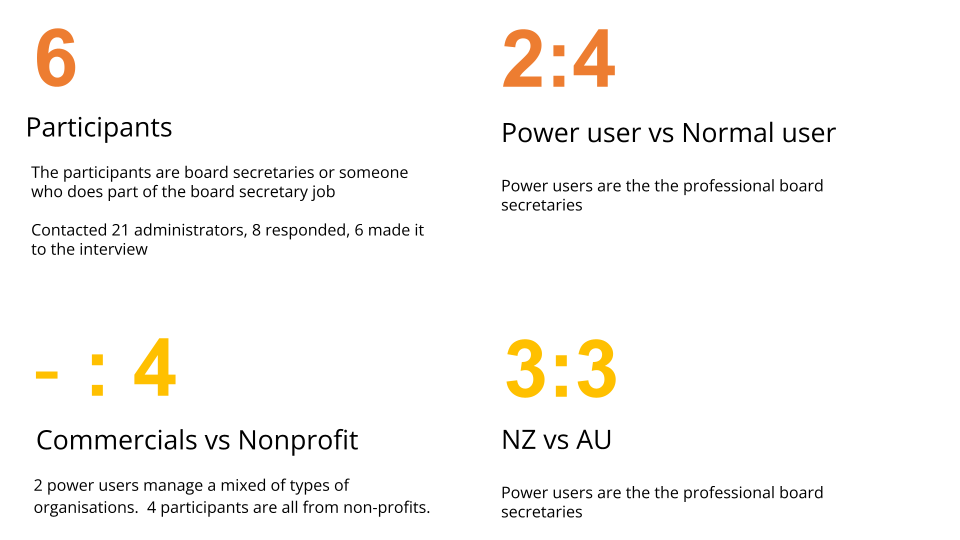
Participants
-
![Current Signing Habits]()
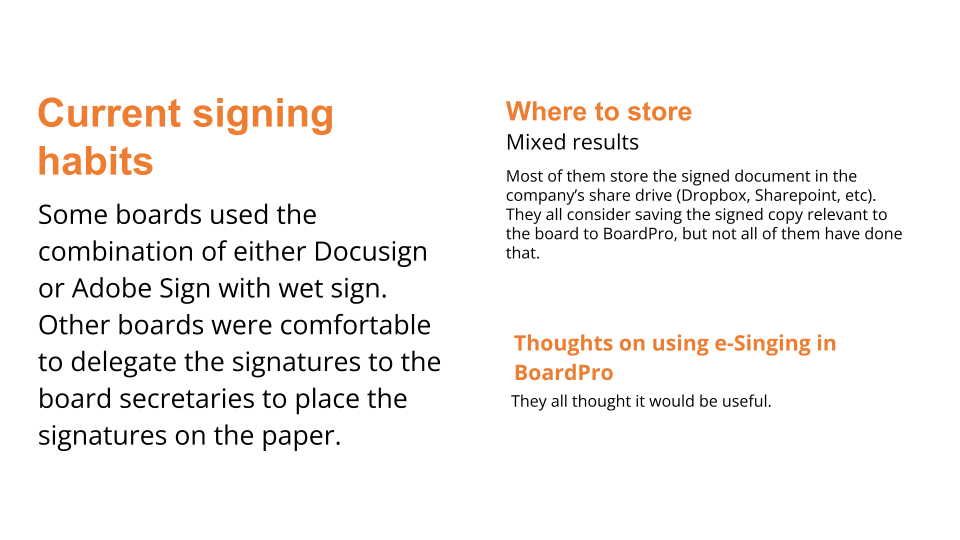
Current Signing Habits
-
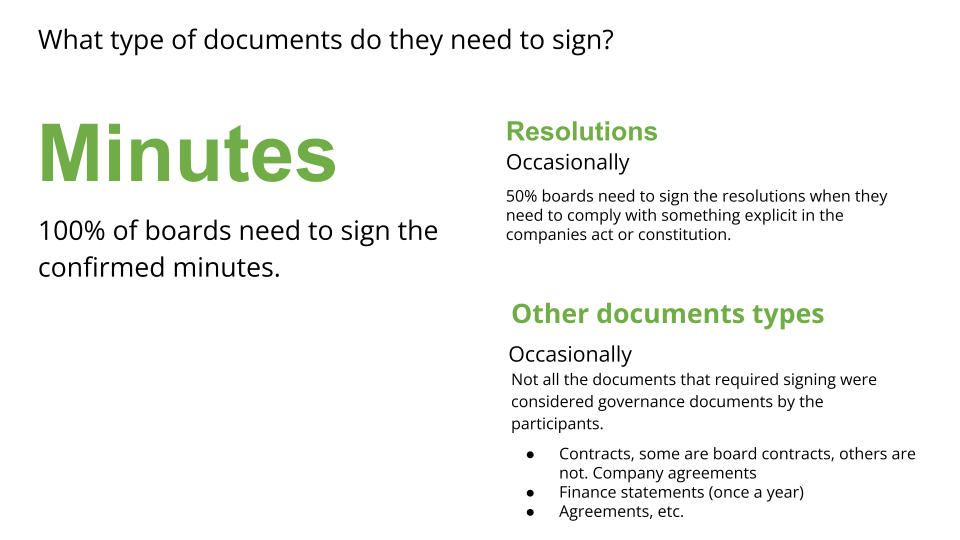
![What do they need?]()
What do they need?
-
![Customer needs]()
Customer needs
-
![User type - Board Secretary]()
User type - Board Secretary
-
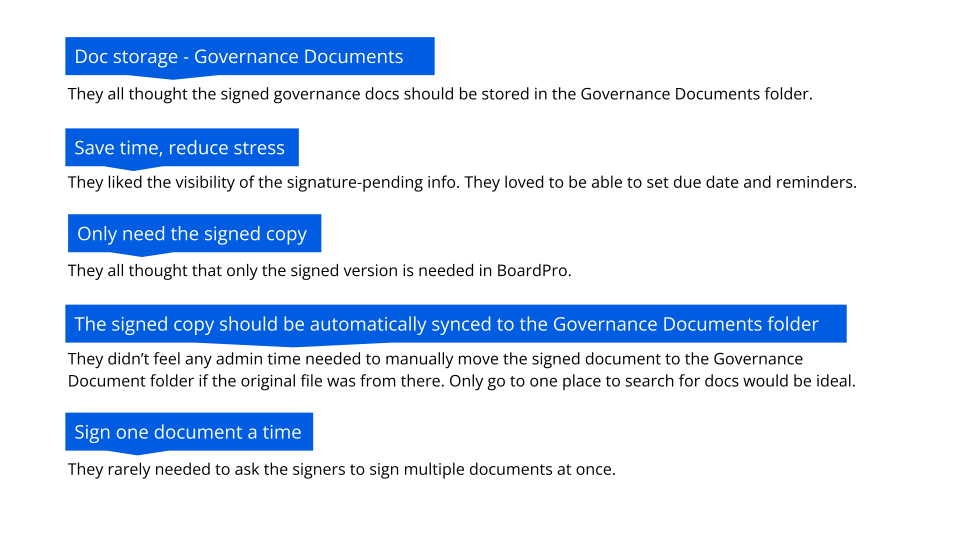
![Board Secretaries' Preferences]()
Board Secretaries' Preferences
-
![User type - Board Member]()
User type - Board Member
-
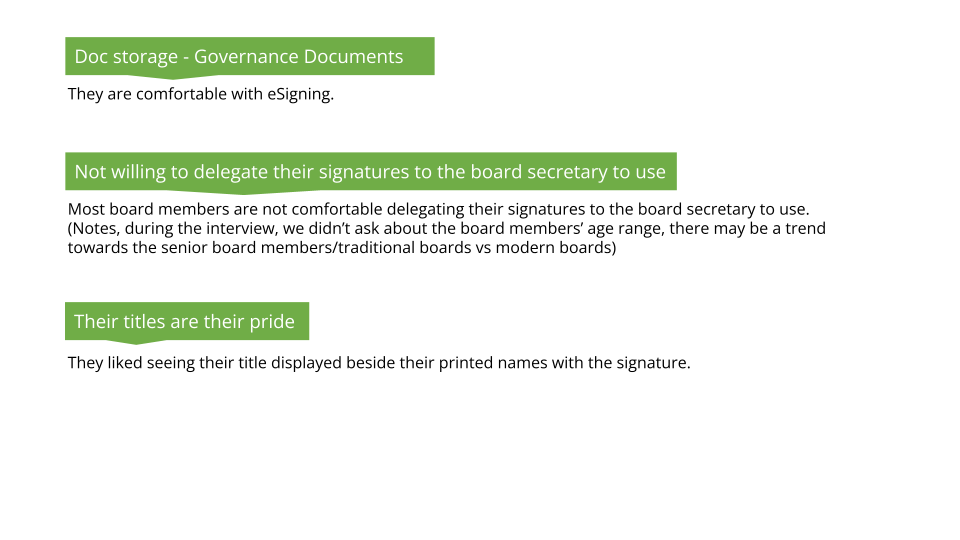
![Board Members' Preferences]()
Board Members' Preferences
-
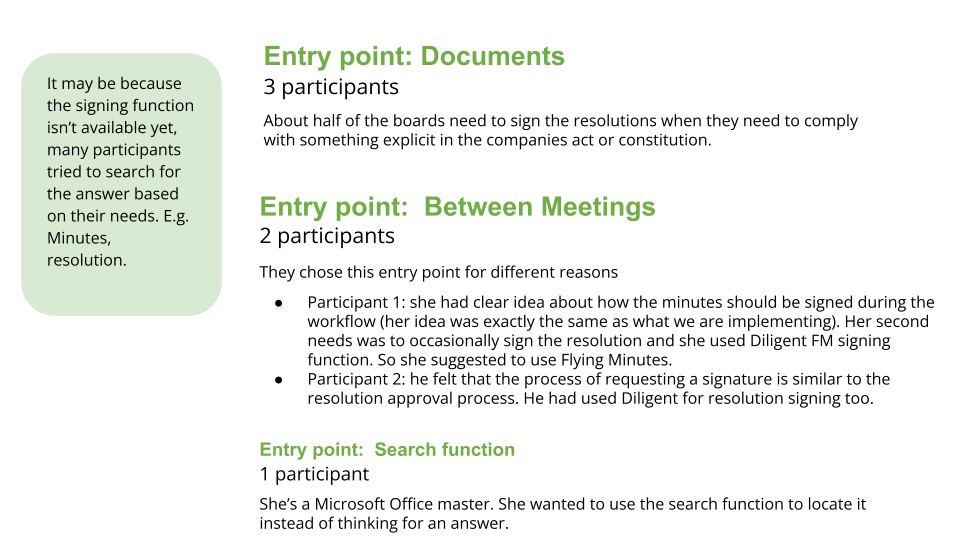
![Where to go to use the function]()
Where to go to use the function
Work examples
Development Stage/Usability Testing