


Research informed product strategy
How user insights drove an MVP approach
Board Tenure
Customers were struggling to manage board tenure across spreadsheets, manual processes and disconnected systems. The immediate pressure was customer retention, but the deeper challenge was designing a solution flexible enough to support different governance policies without creating unnecessary complexity.
Rather than rushing into a large feature build, we used research to identify the smallest solution that could deliver meaningful value quickly.
The Challenge
A full board tenure system would have required adding time based rules to many areas of the platform. But every organisation managed board governance differently, which made automation risky and technically complex.
At the same time, customers were already feeling the pain. We needed to move quickly without making assumptions about what would genuinely help them.
My Contribution
I led research and design in close collaboration with the Product Manager and Sales team.
Given the tight timeline, I worked using a Lean UX approach, running research and design in parallel so insights could immediately shape decisions and priorities.
The focus was not only understanding what users asked for, but understanding the operational problems underneath those requests.
What We Learned
User interviews revealed two consistent issues:
No visibility into upcoming tenure changes.
Administrators had no reliable way to track when board member terms were ending, which made nomination and onboarding processes reactive and stressful.Information was fragmented across systems.
Most organisations managed tenure data partly in the platform and partly in spreadsheets, creating duplication, inefficiency and a high risk of errors.
The core problem was not the interface itself. It was workflow fragmentation and lack of operational visibility.
Product Strategy
The research helped us avoid overbuilding too early.
Instead of attempting a fully automated governance system, we proposed a staged approach:
MVP
Automated tenure alerts
Centralised tenure tracking within the platform
Longer term direction
Integrated board member profiles
Custom governance rules
Data syncing with external systems
This allowed the team to address immediate customer pain points while reducing technical and policy risks.
Impact
Although I left before release, the research and MVP direction helped align product and sales teams around a clear customer problem and a realistic solution.
The sales team used the concepts and designs confidently in customer conversations, including discussions around subscription expansion.
What this project showed
More importantly, the project reinforced how focused research can reduce uncertainty and help teams make better product decisions under pressure.
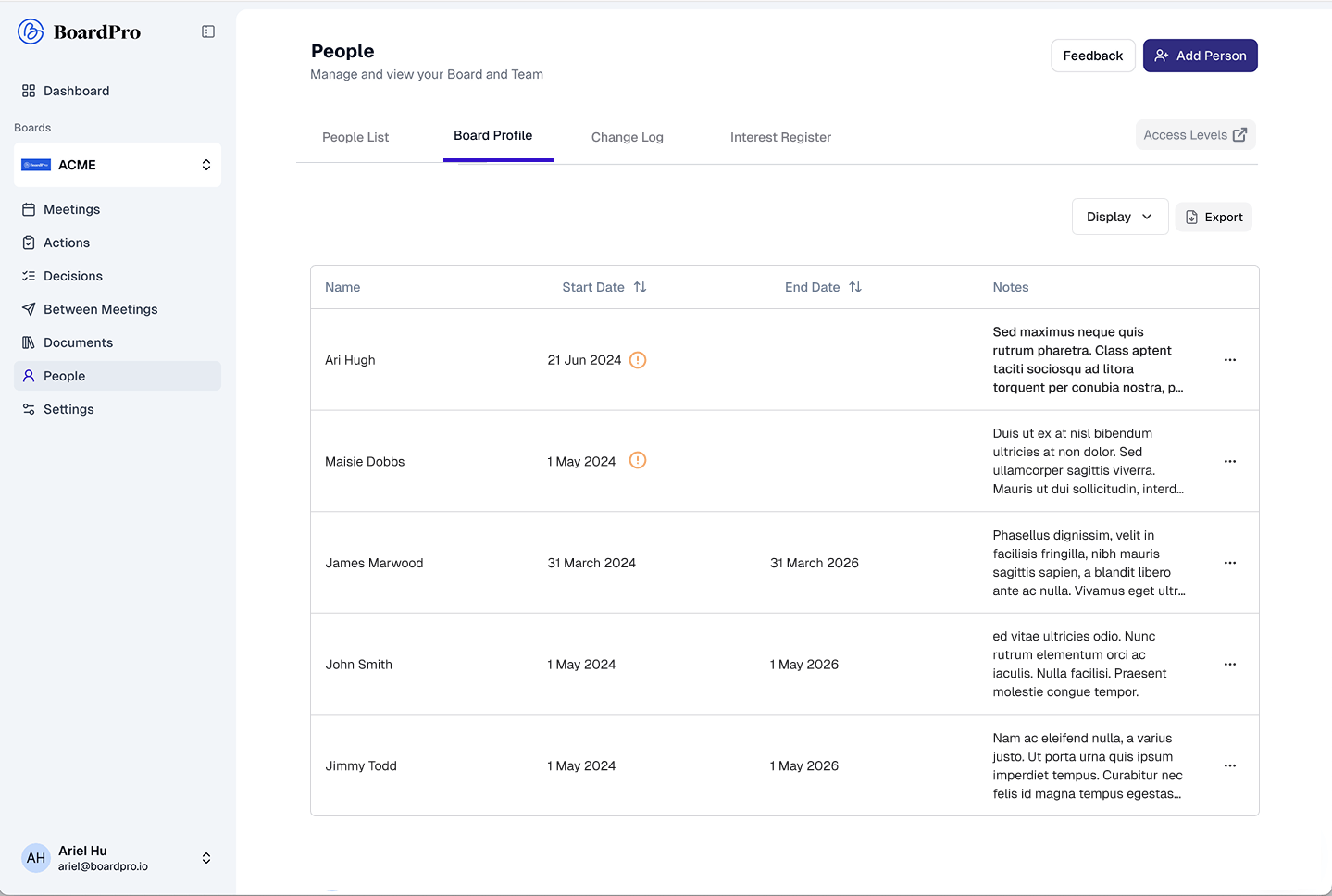
MVP
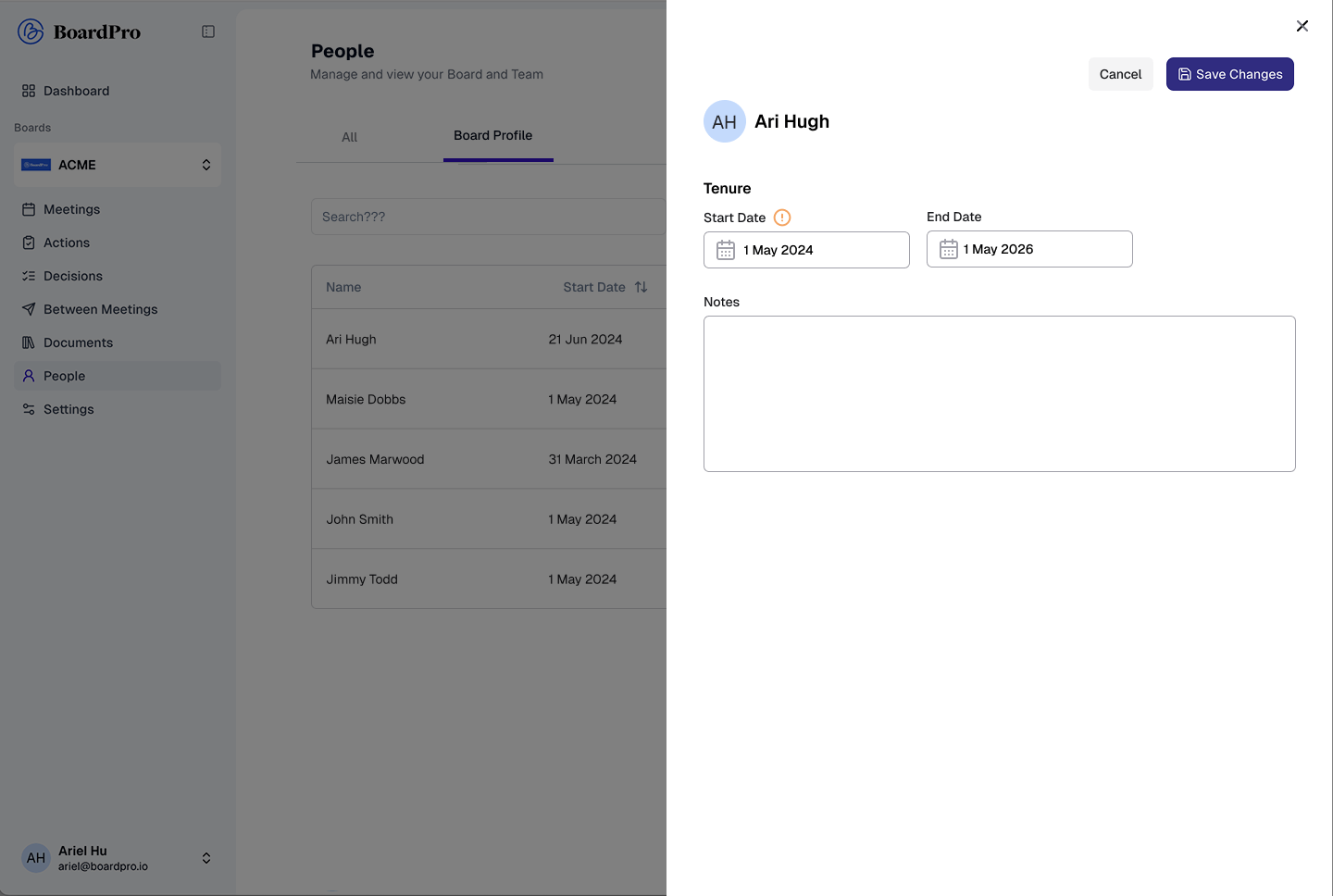
MVP
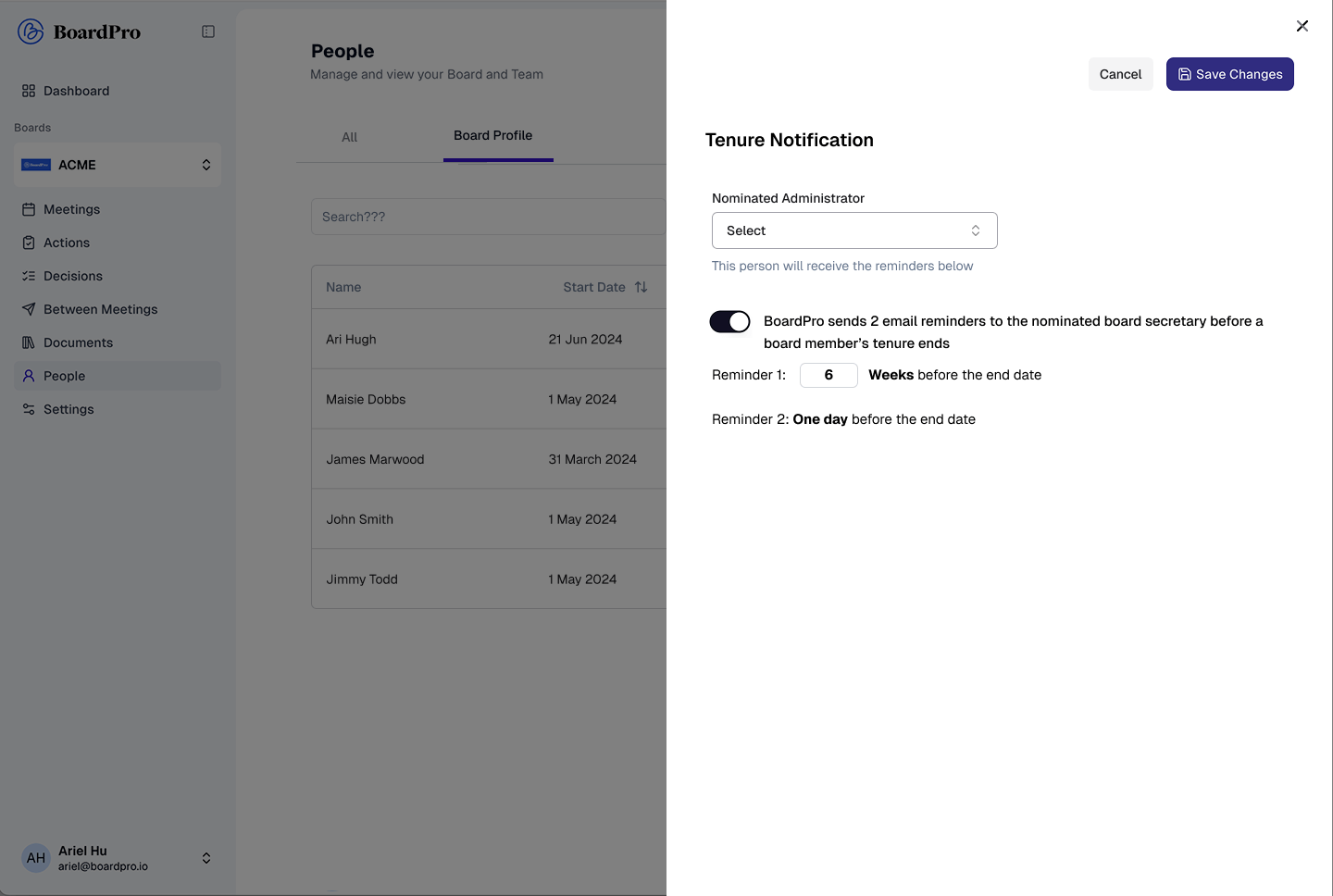
MVP
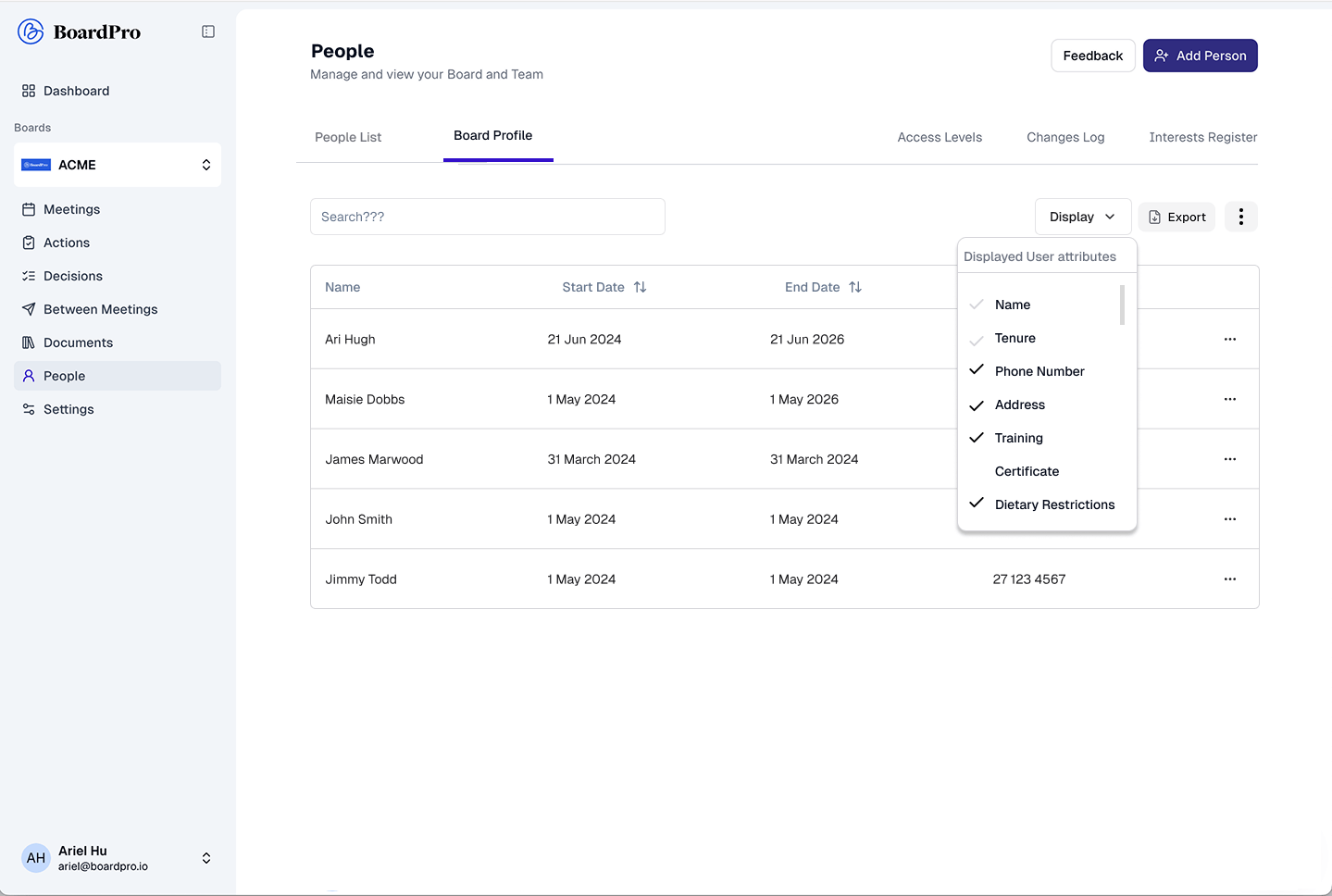
Long Term Solution - Ideation

Long Term Solution - Ideation